
SOURCING GUIDE · RENOVATION & REPLACEMENT
How to Source Replacement Tiles for Renovation Projects
To source replacement tiles, begin with evidence from the existing material: retained pieces, carton labels, product codes, dimensions, edge and back details, installation context and the quantity needed. Treat an exact match as a question to investigate—not a promise that an old product, shade or production lot still exists.
The practical goal is to define an acceptable outcome. That may be an authenticated repeat, a close visual and dimensional match, a deliberately separated repair zone or a project-approved alternative. The buyer and project team should decide which outcome is acceptable before suppliers are compared.
Why replacement-tile enquiries need a different brief
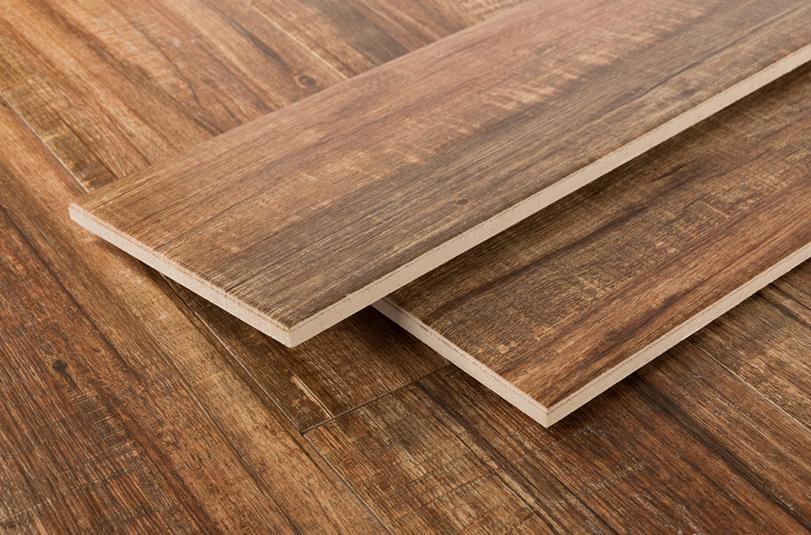
A new-product enquiry can begin with a preferred specification. A replacement enquiry begins with an installed material whose original records may be incomplete. Names used by an owner, retailer or installer may not match the manufacturer’s current terminology, and a room photograph can hide thickness, edge, back pattern, body colour and shade movement.
Start by separating identity evidence from appearance evidence and project acceptance. A carton label may help trace a code; a retained piece can show dimensions and finish; the project team must still decide how much visual or dimensional difference is acceptable in the repaired area.
Identify the existing piece
Collect labels, invoices, drawings, retained samples and clear front, back and edge images. Record which details are confirmed and which are only remembered.
Define the match priority
Rank colour, pattern, sheen, texture, module, thickness, edge, joint alignment and technical requirements according to the repair context.
Set an approval route
Name who can accept a sample, mock layout or intentional contrast. A supplier suggestion is not the same as project approval.
How to source replacement tiles: evidence checklist
| Evidence | What to record | What it cannot prove alone |
|---|---|---|
| Retained tile | Face, edge, back, body colour, nominal and measured dimensions, wear and damage | Original manufacturer, current availability or unseen batch variation |
| Carton or pallet label | Brand, factory code, series, colour, calibre, shade, date or lot references where legible | That a current item using a similar code is unchanged |
| Invoice or purchase record | Supplier, date, description, quantity and project reference | Exact body, finish, shade, calibre or today’s production route |
| Drawings and schedules | Module, joint, setting-out, transitions, quantities and critical interfaces | The identity or present condition of the installed tile |
| Site photographs | Location, light direction, surrounding pieces, repaired boundary and viewing distance | Accurate colour, sheen, thickness or back construction |
| Loose-piece measurements | Length, width, thickness, edge, curvature and measurement method | Universal tolerance or suitability of a proposed replacement |
| Project requirement | Where matching is critical and where a controlled alternative may be accepted | Manufacturer capability until samples and documents are reviewed |
| Quantity and spares | Net repair need, cutting allowance, attic stock and future reserve strategy | Final order quantity without layout and packing review |
Do not damage an installed area merely to obtain evidence unless the responsible project party has approved that action. A qualified site professional should decide how pieces are removed and whether the substrate or assembly also needs investigation.
A six-step replacement sourcing route
1. Build an evidence file
Photograph retained pieces under neutral conditions, include a scale, transcribe labels rather than relying on blurry images, and keep the original files with dates and locations.
2. Measure more than one piece
Where authorised samples exist, compare several pieces. Installed joints or wear can distort assumptions about the original nominal size, thickness and surface.
3. Describe the repair zone
Explain whether replacements will sit within one continuous field, at a threshold, behind equipment or in a deliberately separated area. Visibility changes the approval strategy.
4. Screen possible routes
Review current standard ranges, remaining authorised stock, custom development and design alternatives. Record why each route is or is not feasible.
5. Approve physical evidence
Compare labelled samples with the retained piece and, where appropriate, a multi-piece dry layout or site mock-up. Record light, viewing and acceptance conditions.
6. Control the final order
Tie the purchase description, sample reference, quantity, packing labels and agreed checks to one version. Recheck substitutions or new batches in writing.
What an “exact match” statement should mean
An exact-match claim should not be accepted from a screen image or a familiar marketing name. If the original product can be traced, confirm whether the proposed material is the same manufacturer, series, body, finish, size, calibre, shade or production reference and whether any change has occurred. If it cannot be traced, describe the proposal as a selected alternative and define the approval method.
Ageing, cleaning, sealers, sunlight, installation, grout and surrounding materials can change how an installed surface appears. Even a retained spare from the original order may look different from the field. The comparison record should therefore state what was viewed and what remains uncertain.
- Do not infer current stock from an archived webpage or old invoice.
- Do not call a similar colour an identical shade without a recorded comparison.
- Do not ignore thickness, edge and joint alignment when appearance looks close.
- Do not use one loose piece to approve a pattern or variation range.
- Do not promise that a custom sample can recreate an undocumented historic process.
- Do not treat product matching as approval of the existing substrate or installation.
Choose the route that matches the material
Custom tile and OEM
Use Custom Tile & OEM Services when a documented custom colour, size, mould, surface or packaging study may be required. Feasibility, MOQ, tooling, ownership, samples and timing remain order-specific.
Natural stone selection
For stone, use the Natural Stone Tiles & Slabs route and define species evidence, finish, selection, dry lay, repairs, numbering and crate requirements. A visual match does not authenticate stone identity.
Porcelain and slab routes
Review Ceramic & Porcelain Tiles or Porcelain Slabs & Sintered Stone according to format and material. Confirm classification and product documents rather than using appearance alone.
How TILE IN CHINA can coordinate a replacement enquiry
TILE IN CHINA is a sourcing service provided by LEIYUAN. For an agreed replacement enquiry, LEIYUAN can organise the available evidence, identify missing comparison points, approach suitable manufacturers, coordinate labelled samples and record order-specific product and packing questions.
The service does not certify the original installed material, guarantee a match, confirm hidden site conditions or make the project’s aesthetic, engineering, installation or regulatory decision. Manufacturer capability, stock, custom feasibility, MOQ, price, timing and acceptance remain subject to current evidence and written approval.
Frequently asked questions
Can an old product code confirm an exact replacement?
It can help trace the original item, but the manufacturer should confirm whether the code, body, finish, dimensions and production route remain unchanged. Compare a current labelled sample before approval.
What if no spare tile or carton remains?
Use authorised site photographs, drawings, invoices and careful measurements, then state the evidence gap. A controlled alternative or separated repair zone may be more realistic than an undocumented exact match.
Can a photograph be used for colour matching?
It can establish a direction, but cameras, screens and lighting change colour and sheen. Physical samples viewed under agreed conditions provide a stronger approval basis.
Should the new tile have exactly the same thickness?
Thickness and interfaces should be reviewed because they can affect level, adhesive build-up and transitions. The responsible project and installation parties must approve the proposed assembly.
Can a manufacturer reproduce a discontinued tile?
Sometimes a custom route may be investigated, but feasibility depends on material, process, quantity, tooling, evidence and approval stages. An enquiry does not guarantee reproduction.
Who should approve the final replacement?
The buyer should name the authorised decision-maker, which may include the owner, designer, contractor or another project professional. TILE IN CHINA can coordinate evidence but does not replace that approval.
Send the evidence before asking for a match
Share the retained sample or available records, dimensions, repair location, quantity, destination and approval priorities. The first useful step is to identify what can be verified and what the project must decide.