
PRODUCT FOCUS · CERAMIC & PORCELAIN
Wood-Look Tiles from China for Distributor and Project Sourcing
TILE IN CHINA, a service provided by LEIYUAN, helps overseas distributors and project buyers source wood-look tiles from China, including ceramic and porcelain options from suitable manufacturers. The process can cover sample comparison, face-set and shade review, order checks, packing and shipment coordination; every size, body, performance document, MOQ and lead time remains product- and order-specific.
A useful programme is defined by more than one attractive plank. The brief should identify the intended application, tile body, dimensions, surface, colour direction, face mix, quantity, destination and repeat-order requirements.

Confirm the tile body before the wood design
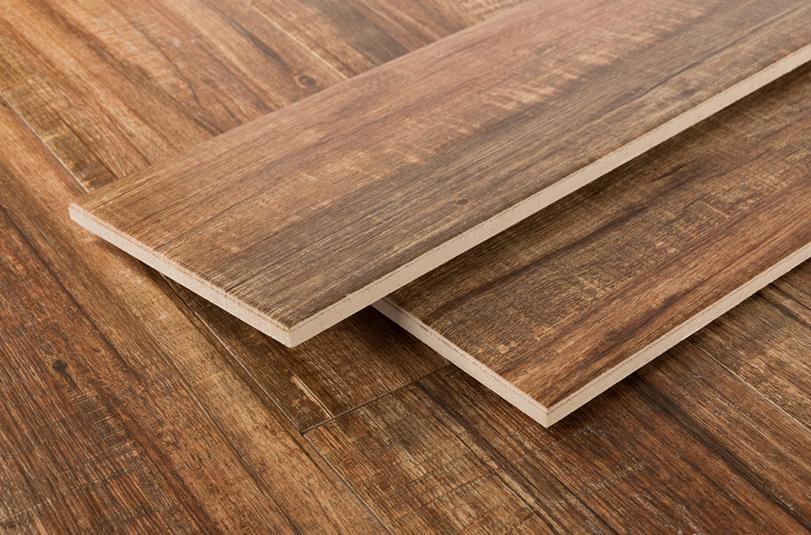
Wood-look describes an appearance, not a material classification. Similar designs may be applied to different ceramic or porcelain bodies, with different dimensions, surfaces, edges, intended uses and supporting documents.
The selected product should be identified in the quotation, sample record, order and carton information. Do not infer water absorption, strength, slip behaviour, frost resistance or any other performance from the printed design or the word porcelain alone.
Build a range, not one attractive plank
A distributor range or project selection should be reviewed across several pieces. Colour direction, graphic faces, texture, sheen, knots, grain contrast and edge appearance work together across an installed area.

Black and dark wood-look ranges
Dark graphics can make repetition, dust, edge contrast and shade movement easier to notice. Review a full face set and a representative layout rather than approving only one face.

Oak, natural and light directions
Natural and light ranges should still be assessed for face distribution, undertone, contrast, print definition and acceptable shade range under the intended lighting.

Brown, walnut and weathered directions
Warm, mixed or weathered graphics may include intentional variation. The approved range should distinguish designed variation from print defects, uncontrolled shade changes or an incorrect face mix.
Two commercial routes
Distributor range development
A range brief may cover target price positioning, body and size families, colour balance, sample boards, face-set information, cartons, private-label artwork and repeat-order records. Every commercial term is confirmed with the selected manufacturer.
Project and schedule sourcing
A project brief should identify application areas, drawings or layouts, quantities, programme timing, product documents, sample approval, shade control, spare quantities and delivery phasing. Final suitability remains project-specific.
What buyers should verify when sourcing wood-look tiles from China
The comparison basis should be written for the selected product. The following questions help prevent a visual reference from becoming an incomplete specification.
| Check | What to confirm | Useful evidence |
|---|---|---|
| Product identity | Ceramic or porcelain body, series, colour, surface and intended application | Current data sheet, quotation and carton information |
| Dimensions and calibre | Nominal size, actual tolerance basis, thickness, edge and calibre control | Written specification and measurement records |
| Graphic face set | Number of faces, repeat pattern and expected distribution | Face-set sheet or representative layout |
| Shade range | Approved colour direction and acceptable variation | Several labelled samples or an approved board |
| Surface | Texture, sheen, cleanability and application-specific requirements | Physical sample and relevant product documents |
| Flatness and edges | Agreed method, acceptance criteria and installation implications | Sample and order-specific inspection records |
| Repeat orders | Series continuity, current batch, retained reference and replacement strategy | Approved-sample record and batch information |
| Packing | Pieces per carton, protection, pallet, labels and private-brand details | Approved packing and artwork record |
A website image or archived product name does not prove current availability. Product identity, evidence and commercial terms must be reconfirmed for the present enquiry.
What to send for a wood-look tile enquiry
- Distributor range or project application
- Ceramic or porcelain preference, if already specified
- Target dimensions, thickness and edge
- Colour and grain direction
- Reference images or an authorised physical sample
- Required face variation and layout expectations
- Estimated quantity and order phasing
- Destination country, port or city
- Required product documents or test items
- Carton, pallet, language and private-label requirements
- Preferred sample and delivery period
If several details are still open, label them as open points. A clear uncertainty is safer than an assumed specification.
From brief to repeat-order record
Range and application review
Separate the visual direction from body, dimensions, use, evidence, quantity, destination and commercial requirements.
Manufacturer and sample comparison
Compare suitable manufacturers on the same brief, then record product-specific differences and approved samples.
Order and packing confirmation
Confirm series, shade and calibre basis, face set, quantity, carton, artwork, pallet and required documents before production.
Order-specific quality checks
Use an agreed sampling plan and acceptance criteria tied to the order and approved reference. For scope boundaries and reporting, review Quality Inspection & Shipping.
Shipment and record retention
Retain approved sample, batch, carton, pallet and document records that may help with repeat orders or claims review.
TILE IN CHINA coordinates sourcing and order support. Inspection is a sampling and reporting process; it does not guarantee manufacturing, installation or final project performance.
Custom and private-label programmes
Selected manufacturers may be able to review custom colours, surfaces, sizes, cartons or private-label artwork. Feasibility, sample rounds, tooling, artwork responsibilities, tolerances, MOQ, price and timing are confirmed for the chosen process and order; none is offered as a universal website term.
Related sourcing guides
Frequently asked questions
Is every wood-look tile porcelain?
No. Wood-look describes the design. The selected product may use a ceramic or porcelain body, which must be confirmed from current product documents.
Can you source black wood-look tiles similar to an older product?
We can review the reference, but an old name or image does not prove that the same product remains available. Send photos, dimensions, application and any carton or sample information so current alternatives can be checked.
How many graphic faces should a wood-look tile have?
There is no universal number. Ask the manufacturer for the face set and review repetition across a layout large enough for the intended application.
Can one approved sample represent every future batch?
No. It is a comparison reference. Repeat orders still require current product, batch, shade, calibre and packing checks.
Can private-label cartons be coordinated?
Possibly. Artwork, legal content, manufacturer capability, sample approval, MOQ, cost and timing remain specific to the selected programme and destination.
Does a textured wood surface prove slip resistance?
No. Visual texture is not a test result. Any slip requirement must be stated for the intended application and checked against product-specific evidence using the relevant method.
Related Insights
Explore practical guidance selected for specification, approval and order control in this product or service area.
Send your wood-look tile requirements
Send the application, tile-body preference, dimensions, colour and grain direction, quantity, destination, reference images and any packing or private-label needs. Open points can be clarified before manufacturer comparison.