
SUBWAY TILES FROM CHINA · WALL & BACKSPLASH SOURCING
Subway Tiles from China for Wall and Backsplash Sourcing
Direct answer: Subway tiles from China are a format and layout direction, not one universal material or performance class. TILE IN CHINA is a sourcing service operated by LEIYUAN INDUSTRIAL CO.,LTD. (“LEIYUAN”). We help buyers compare ceramic-, porcelain- or glass-labelled wall-tile proposals by exact body, work size, glaze or face, edge, colour range, samples, packing and batch records. A glass subway tile is not automatically a mosaic sheet, and a familiar shape does not prove suitability for a kitchen, bathroom, shower or another project condition.
This page describes a sourcing and verification route. It does not promise current stock, a named manufacturer, a fixed specification, installation approval or an exact replacement for an archived product. Product identity, intended area and supporting evidence must be checked for each enquiry.
What Subway Tiles from China Must Identify
“Subway tile” is used broadly in commercial catalogues. A classic 3×6 rectangle is one familiar direction, but it is not a technical definition and should not be used to infer the body, thickness, mounting or application. Start by identifying the proposed product rather than treating the category label as evidence.
ISO 13006:2018 defines terms and establishes classifications, characteristics and marking requirements for first-quality ceramic tiles made by normal extrusion or dry pressing. Its published scope does not cover glass products, decorative accessories or trim, or ceramic mosaics small enough to fit within a 7 cm square. Use it only when the proposed product falls within that scope; appearance alone cannot establish classification or installation suitability.
Product and material identity
Record the manufacturer, factory, product code, declared ceramic, porcelain, glass or other construction, sample version and intended area. If the body is not supported by current product information, leave it unclassified.
Work size, face and edge
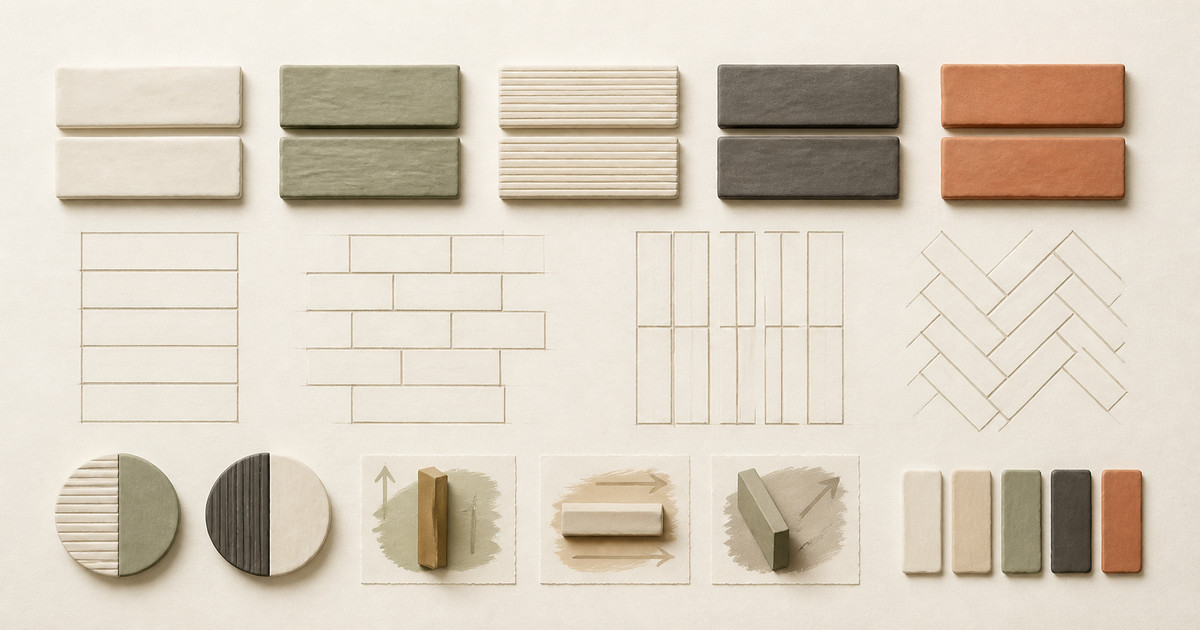
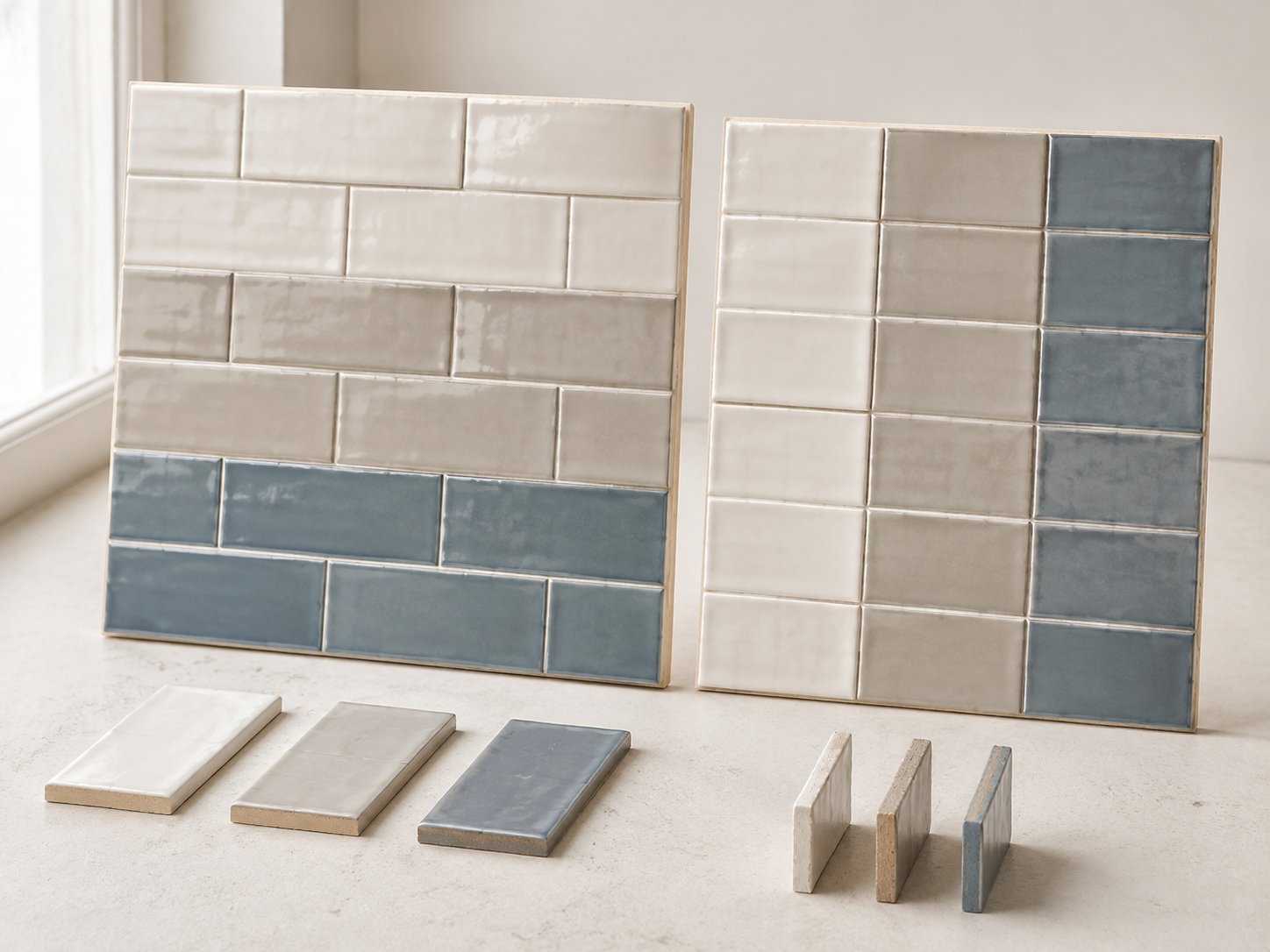
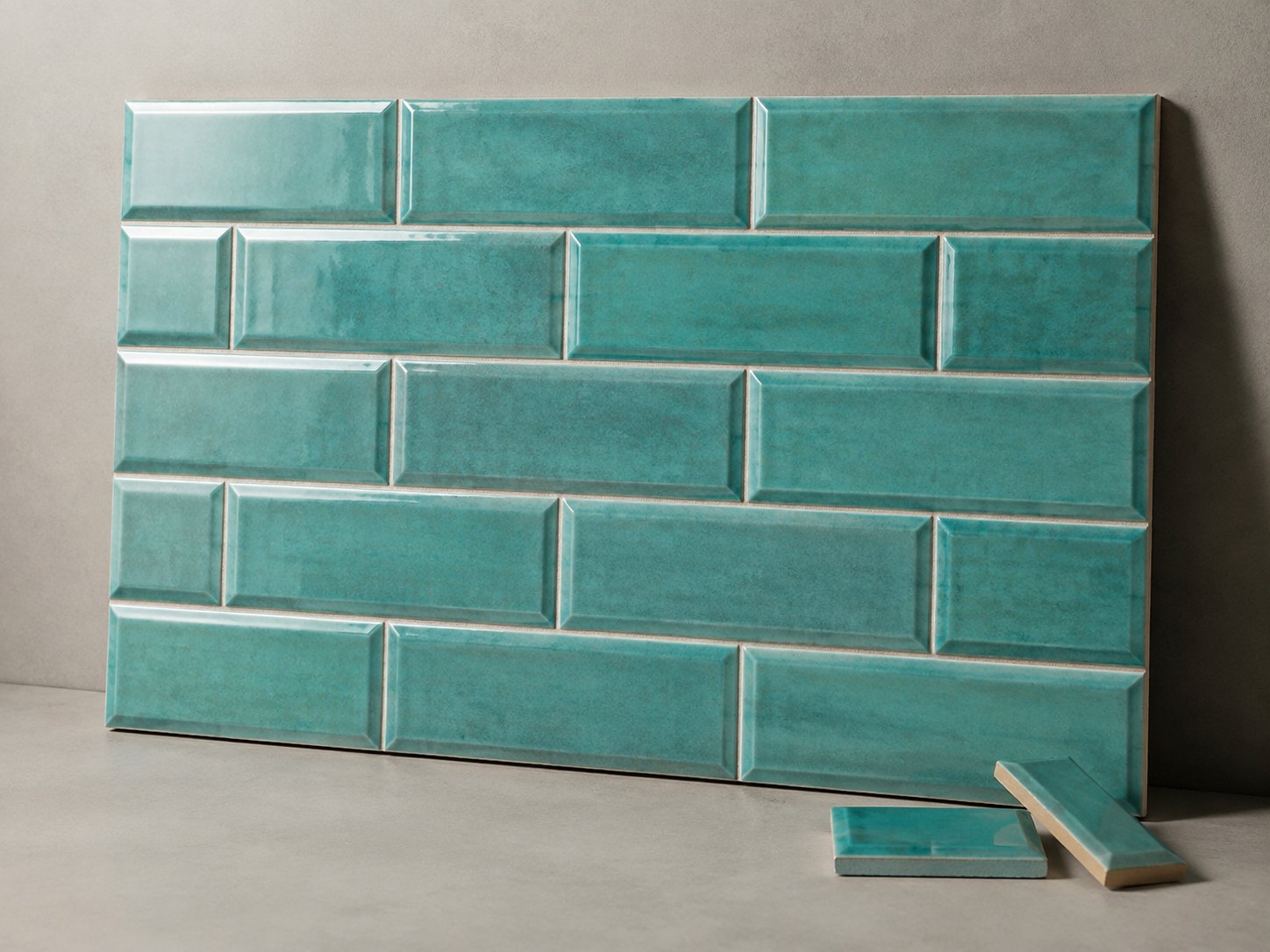
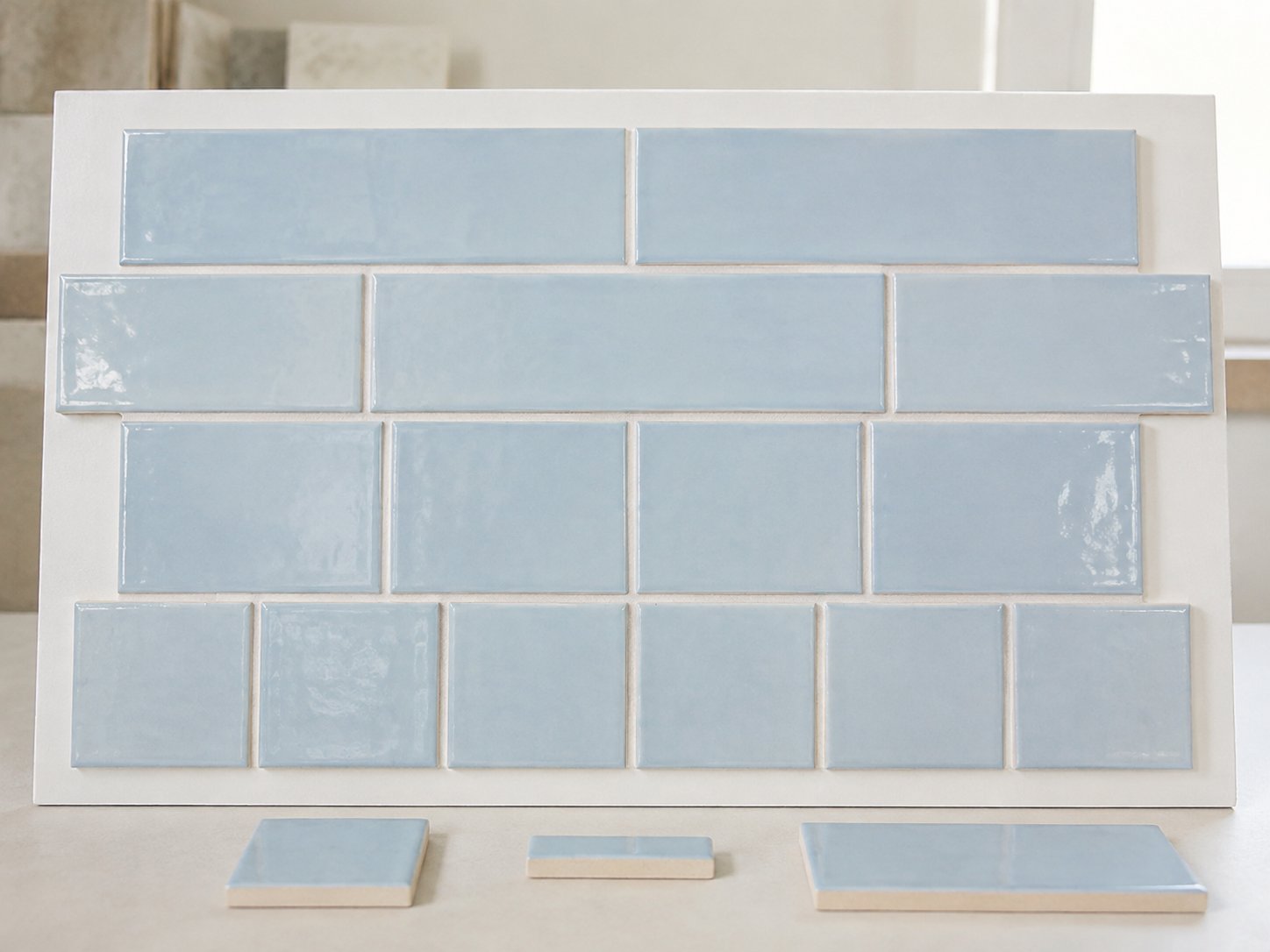
Define work size and nominal size, thickness, glaze or face finish, gloss or matt direction, texture, crackle-look or handmade-look appearance, bevel or edge and the expected colour and shade range.
Loose piece or mounted construction
Confirm whether the units are supplied loose or as a mounted sheet, and record the unit dimensions, sheet dimensions, mounting method and orientation. Do not infer mosaic construction solely from small size, rectangular shape or glass material.
Application and system boundary
Name the wall, backsplash, bathroom, shower or other condition and keep substrate, waterproofing, adhesive, grout, joints and installation responsibility with the relevant designers, specifiers, installers and system suppliers.
Subway Tiles from China: Material and Appearance Families
Use these families to structure supplier questions, not to claim that every direction is currently available. The exact proposal must identify the material, construction, finish, size, code and sample that the buyer is approving.
Ceramic-labelled glazed wall tiles
Compare the declared body, face glaze, work size, thickness, edge, shade range and intended wall area. A familiar glossy surface does not by itself establish ceramic classification.
Porcelain-labelled small formats
Use the porcelain label only where current product evidence supports it. Check whether the proposed construction, surface and documented characteristics cover the intended wall, floor or special exposure.
Glass subway wall tiles
Identify the glass construction, colour method, transparency, backing or coating, face, edge, dimensions and loose or mounted form. Adhesive visibility and compatibility remain whole-system questions.
Colour and surface directions
Gloss, matt, crackle-look, handmade-look, bevelled and textured directions need an approved physical range. One selected photograph cannot define the delivered sheen, colour or permitted variation.
Format and layout directions
Classic rectangles, elongated pieces and related small wall formats may support running bond, stack, vertical or herringbone concepts. Define the actual module instead of relying on a style label.
Custom colour, format and OEM
Selected suppliers may review custom enquiries. Feasibility, sample approval, tooling, MOQ, cost, programme and private-label packing remain product- and supplier-specific.
Subway Tiles from China: Application Briefing
Kitchen and commercial backsplash
Define the surface, cleaning exposure, edge and transition details, joint direction, cut locations and visual range. The responsible system parties must confirm substrate preparation, adhesive, grout and sealant decisions.
Bathroom and shower wall
Shape alone does not prove wet-area suitability. Review the exact tile together with substrate, waterproofing, adhesive, grout, movement joints, penetrations and the written requirements of the responsible system parties.
Interior feature and hospitality walls
Record viewing distance, lighting, layout, corner conditions, service penetrations, cleaning and replacement planning. Approve colour and finish across a range, not only one close-up.
Special exposure boundary: exterior, immersed, floor or other special use requires exact product and whole-system evidence. Do not extend a wall-tile category name into those applications without documented review.
How to brief subway tiles from China
Send known requirements and mark unresolved decisions. A comparison brief may include:
- Project location, intended area and wall, wet-area or other exposure
- Declared material or body requirement and any current evidence basis
- Work size, nominal size, thickness, face, glaze, texture, edge and bevel
- Colour, sheen, acceptable shade range and physical sample approval route
- Loose piece or verified mounted construction, carton count and piece orientation
- Running bond, stack, vertical, herringbone or other layout reference
- Joint, module, cut, corner, trim and transition requirements from drawings
- Quantity, waste assumption, phases, batch continuity and replacement-piece planning
- Required standard, test method, report scope and destination documentation
- Packaging, labelling, edge protection, sample retention and loading records
Use a project drawing and dry layout or mock-up where module, joints, corners or visual range are critical. An image search result or archived catalogue image can guide a sourcing enquiry, but it cannot replace the controlled product and order file.
Subway Tiles from China Buyer Verification Table
| Control | What to define | Record to retain |
|---|---|---|
| Identity | Manufacturer, factory, code, declared body and intended area | Offer, label and approved sample |
| Size and edge | Work size, thickness, bevel or edge, joint and agreed tolerance | Measurements and layout record |
| Appearance | Face, glaze or finish, colour and approved variation | Range board or signed physical sample |
| Application evidence | Named product, method, scope and conditions | Current report or document in the correct scope |
| Accessories | Corners, trims, cuts and transitions | Drawing, sample and order schedule |
| Packing | Piece and carton count, face and edge protection, batch labels | Approved pack and loading record |
A document for another body, size, surface, manufacturer or factory is not automatically transferable. Confirm that each record identifies the proposed product and covers the decision being made.
How TILE IN CHINA Coordinates Subway Tiles from China
Brief and manufacturer questions
LEIYUAN can organise known requirements, unresolved questions and candidate supplier responses so that material, size, face, edge, application and evidence are compared on the same basis.
Labelled sample and range review
Samples can be coordinated with supplier, code, date and intended status recorded. Buyers should approve the relevant colour and finish range rather than treating one piece as the full order.
Documentary comparison and agreed checks
TILE IN CHINA can collect available product information and coordinate agreed order checks within the stated scope. It does not certify products or replace a laboratory, designer, installer or destination authority.
Packing and export follow-up
Agreed carton counts, labels, face and edge protection, batch references and loading records can be followed within the order scope. Review Quality Inspection & Shipping for the wider boundary.
Designers, specifiers, installers, system suppliers, laboratories, certification bodies and destination authorities retain their respective design, installation, test, certification and acceptance responsibilities.
Looking for a former AATILE reference?
Send the archived URL, product code, photographs, work dimensions, quantity, destination and project use. TILE IN CHINA can review possible current sourcing or replacement directions, but an archived listing does not establish current availability or an exact equivalent.
The former AATILE subway catalogue included mixed and sometimes incomplete material descriptions. For any archived reference, TILE IN CHINA will first verify the product type, dimensions, construction and intended use, then assess whether a current comparable proposal can be sourced. Archived listings do not prove current supply or exact equivalence.
Subway Tiles from China: Related Sourcing Routes
Related Insights
Explore practical guidance selected for specification, approval and order control in this product or service area.
Subway Tiles from China Sourcing FAQ
Are subway tiles always ceramic?
No. The label may be used for ceramic-, porcelain- or glass-labelled products. Verify the exact body and product record.
Is glass subway tile the same as glass mosaic?
Not necessarily. “Subway tile” describes a shape or format, while “mosaic” may refer to small units supplied loose or mounted as sheets. Confirm unit size, sheet format, mounting method and the supplier’s product documentation.
Are subway tiles suitable for showers?
Shape alone does not establish shower or wet-area suitability. Review the exact tile, substrate, waterproofing, adhesive, grout, joints and responsible system-party requirements.
Can colours and sizes be customised?
Selected suppliers may review them, but feasibility, sample approval, MOQ, tooling, cost and programme are product- and supplier-specific.
Can TILE IN CHINA review an old AATILE product code?
Yes. Send the archived URL, code, photographs and measured dimensions. We can request current comparable proposals, but availability and equivalence must be verified.
What should I send for a comparison?
Send application, material or body requirement, work size, face and edge, colour range, layout, quantity, destination, evidence, samples, packing and any archived reference.
Send a Subway Tiles from China Brief
Share the intended area, declared material, work size, finish, edge, colour range, layout, quantity, destination, evidence needs and any archived reference. Mark unknowns as verification points instead of guessing.